


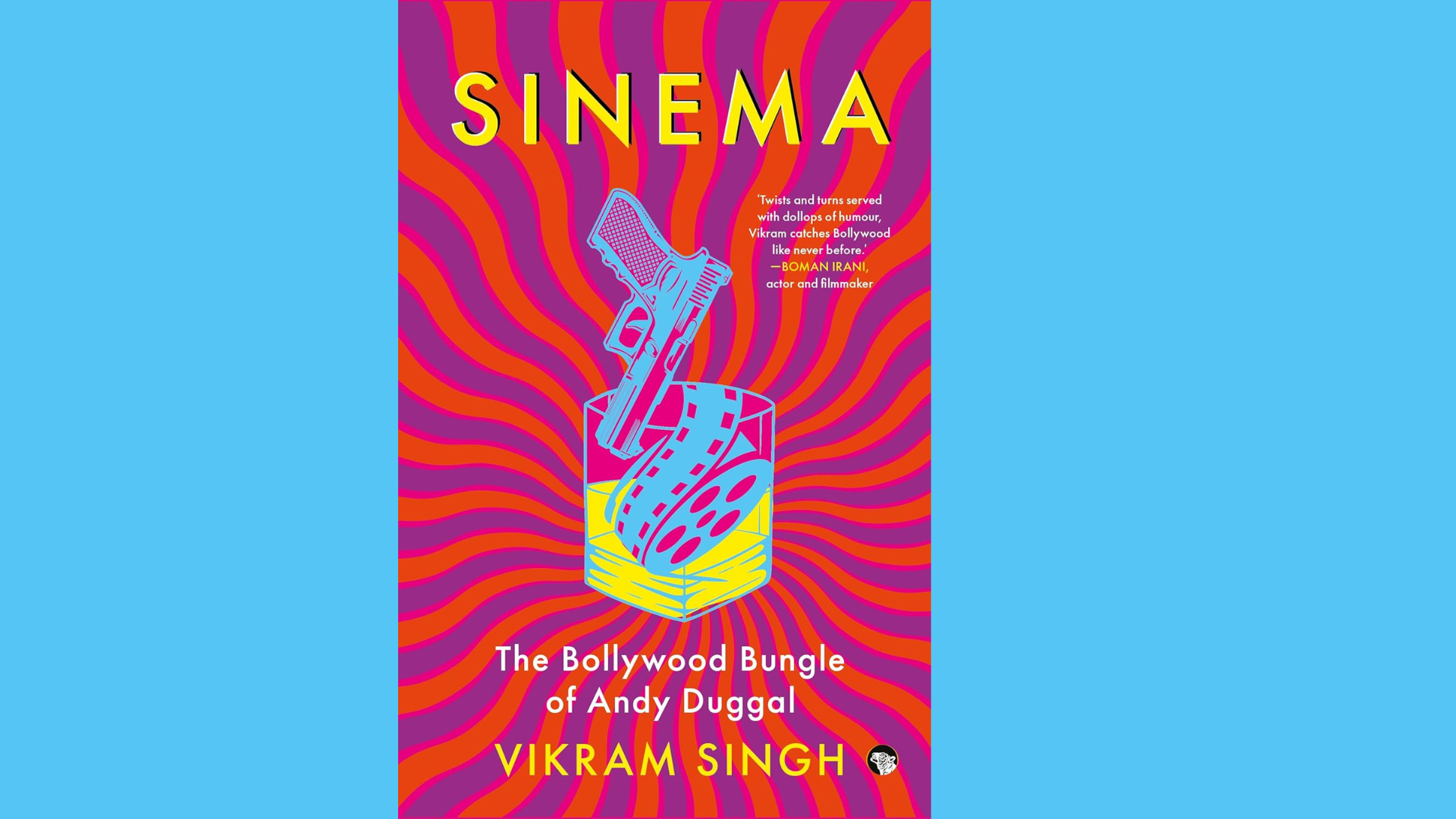
Sinema: : The Bollywood Bungle of Andy Duggal
by Vikram Singh
Published by Speaking Tiger (2024)
Sinema, filmmaker-scriptwriter Vikram Singh’s debut novel, gives us a bird’s-eye view of the intriguing landscape of Bollypur. Here, sunny boulevards of glitz and glamour coexist with dark and dangerous alleyways. Struggling to navigate this baffling place is our antihero, Anand “Andy” Duggal, a third-generation film producer. Andy’s life is in a steady downward spiral—his movie is collapsing, his marriage is all but over, he owes money to half the city, and somehow, he also manages to get entangled with one of Mumbai’s most feared dons, Javed Supari. Although Andy’s mess is mostly the result of his own doing, you can’t help but feel for him, and before you know it, you find yourself hoping the guy catches a break.
His journey, however, is nonstop drama and chaos. Along for the ride are the supporting cast—er, characters— whom Singh paints with vivid strokes. There’s Syalji, Andy’s pragmatic executive producer with an insatiable love for samosas and chai. The earnest Joni is Andy’s soon-to-be ex-wife, whose feelings towards him yo-yo between frustration and concern. Gogi is Andy’s best friend, confidant, and “supplier”. What is also interesting is the exploration of different power dynamics—between mentors and protégés, producers and talent, and insiders and outsiders. These relationships often become tense and manipulative, shedding light on the moral compromises people make to survive or dominate.
The brisk plot with twists aplenty makes this novel an easy and engaging read. The story is generously laced with dark humour, exposing the transactional and fickle side of the industry with tact and wit. Sinema isn’t really a story about the movie that is being shot, but rather about the players behind the scenes and their secrets, struggles, delusions, and desires.
Over the latter third of the novel, the different subplots converge, involving hidden motives, past secrets, and a growing sense that not everyone is who they claim to be. The final act shifts tone rather abruptly, leaning a little too heavily into melodrama and exposition. This too, however, could be said to be in perfect sync with the filmy subject of the novel.
All in all, Sinema is a fun read that offers a glimpse into what Bollywood might be like behind the cameras, smoke, and mirrors.


RELATED ARTICLESMORE FROM AUTHOR
Swallowing the Sun
Death of a Gentleman
The Kidnapping of Mark Twain: A Bombay Mystery