


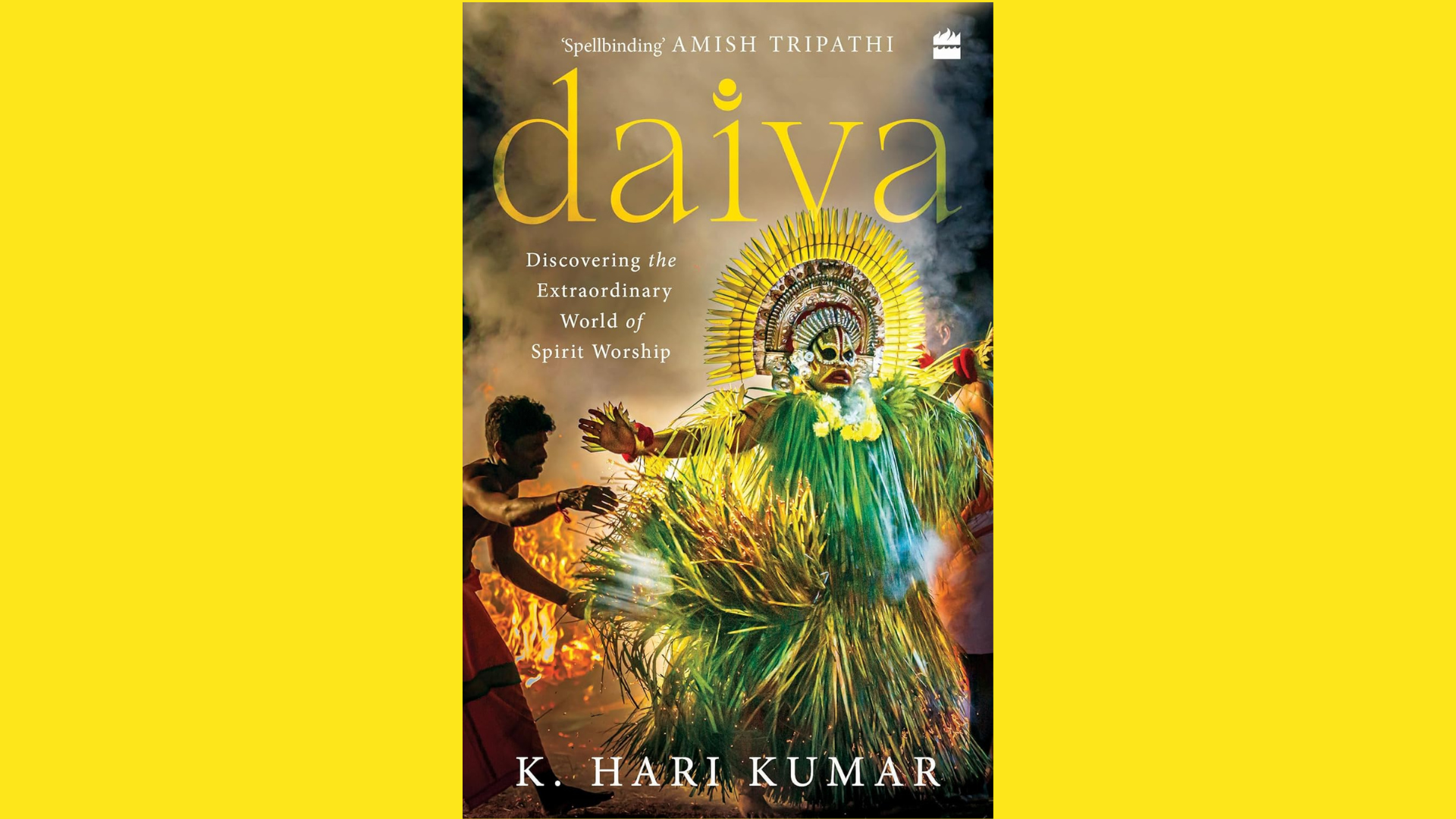
Daiva: Discovering the Extraordinary World of Spirit Worship
by K. Hari Kumar
Published by Harpercollins India (2024)
The pan-Indian phenomenon of Kantara resulted in a flood of derivative works focussing on traditions of spirit worship, not just in Karnataka and Tulunadu, but even Kerala and Tamilnadu. So, it was with a healthy dose of skepticism that I picked up Daiva: Discovering the Extraordinary World of Spirit Worship by K. Hari Kumar. Perhaps, unburdened by the weight of expectations, I found the book a swift and pleasurable read. The book falls short of
being a great work though and I will detail in this review where it shines and where it falters.
To begin with, the book cover is stunning. The image of the Daiva, Guliga in the back cover credited to Wikimedia Commons (which itself ascribes it to one Mr. B Rakesh Kumar) is a powerful image. The front cover too is credited to the same photographer in a Mapacademy article. These images evoke the same sense of awe that the first viewing of Kantara did. Hari has divided the book into two parts. The first part is an overview of the Bhuta Kola, its origins, the land in which it is set in and the steps interspersed with personal tales from the author. The chapters are short and focussed which makes them an easy read. The opening chapter shows Hari’s extensive research as he draws parallels from African, Haitian, Tibetan, Jain, Buddhist, and other customs. Given my personal affinity for snakes (and any non-human who crawls sans a spine) , I loved Hari referring to them as Chthonic deities in one of the later chapters. That phrase inspired images of snakes being the Persephones of our planet bringing about seasonal changes with their forked tongues.
After having set right the distinction between spirit and devil worship and dispelling the negative connotations that a colonial mindset associates with Bhuta Kola and the world of Satyolu (as the Davias/gods are called), Hari presents a concise introduction to this unique living tradition. He meticulously details everything from the oral tradition that has thrived through centuries to the attire and the steps involved in a Bhuta Kola performance. I enjoyed Hari’s description of the Kola performer as an artist in the episode where the Daiva consoles and reconciles a family that is split. Hari’s keen observation of the Daiva’s empathy was impressive. I was pleasantly surprised to learn the new nugget of the story of snake venom turning the Kerala and Tulu lands fertile about the legend of Parashurama from this book.
Apart from these flashes of brilliance, Hari’s writing in the first part is bland and sometimes borders on unpalatable. He uses rather awkward phrasing. Consider this sentence- Whether this soul encapsulates consciousness or if it’s the other way round is another debate. Or this one – The banana stem is strong but it also allows to be penetrated owing to its fibrous composition. I wish a good editor had rephrased these sentences to Does this soul hold consciousness? Or does consciousness create the soul? That is indeed debatable and Despite being strong, the banana stem’s fibrous steam is easily penetrable. Unfortunately, the personal narratives, which should have been a strong point of this type of book, fall flat too. I could not make the connection between Hari sharing a personal story and the following section. The stories were rather bland and neither profound nor emotionally moving. Perhaps Hari could have dug deeper into his heart in this aspect.
The first part of the book would have also been better served with images and diagrams of the Daivas. I would have loved to see labelled diagrams of the different Daiva’s outfit. I would have also loved to read more human stories of these performers who become gods in costume. What does the Guliga performer do once his costume is removed? How does he live as a human carrying the weight of a god? How does his society treat him when he is unmasked? What is his reality – the divine mask or the human face? A chapter dedicated to these questions narrated with the magic of the Kochu Thomban episode in The God of Small Things would have elevated the book significantly. The shortcomings of the first part are easily redeemed in the second part which is a collection of tales about the Daivas (aka) Satyolus.
These short tales narrating the origin, and adventures of the various spirit deities was a treat. I read this book when I was deep in the jungles of Western Ghats and felt my hair stand on its end when the awesome Panjurli descended to the Ballal’s home to commence his feasting. I was moved by the tales of Koragajja, the twins Koti and Chennaya, and Siri fighting against caste and gender oppressions. Hari’s experience as a horror story writer comes in handy in these tales. These tales, I sincerely believe, belong to the same class as A K Ramanujan’s Folktales of India for their cultural value even if the writing is a few notches below.
An aspect that stood out for me throughout the entire book was Hari’s voice. He speaks in a kind and honest voice, reserving empathy for all the players in this tradition – the performers and the faithful who kept the tradition alive, the colonizers who reviled these traditions while still meticulously documenting them, and the modern rationalists. His narrative is open-minded and reflects the mindset of a curious learner, apt for a non-fiction book like this. His concern for the Tulu language and the traditions is earnest.
In summary, Daiva: Discovering the Extraordinary World of Spirit Worship, is a good book. With better editing, more intense writing, and personal stories with more heart, it could have been a great book. Hari promises us another book on the same subject. Here’s hoping that the next book rises to the glory of Tulu Appe and the Satyolus who inhabit them as living gods.
Ratings:
Research: Excellent
✒️Writing: Passable
Narrative: Good
Sensitivity: Excellent

RELATED ARTICLESMORE FROM AUTHOR
Swallowing the Sun
The Book Of Everlasting Things
I Kick and I Fly